As modern applications scale across regions, users, and workloads, many development teams begin reevaluating their database infrastructure. While PlanetScale has become a popular choice for serverless MySQL scaling, branching workflows, and strong developer experience, it is not the perfect fit for every use case. Pricing considerations, compliance requirements, feature limitations, and architectural preferences often lead teams to explore alternatives that better align with their roadmap.
TLDR: Developers looking to replace PlanetScale typically compare Amazon Aurora, Google Cloud Spanner, CockroachDB, Neon, and MongoDB Atlas. Each offers different strengths in scalability, consistency, pricing, and operational control. The right choice depends on workload patterns, global distribution needs, and database model preferences. Understanding these trade-offs is essential before committing to a migration.
Below are five popular solutions developers frequently evaluate when transitioning from PlanetScale for scalable database architectures.
Table of Contents
1. Amazon Aurora
Amazon Aurora is a fully managed relational database service compatible with MySQL and PostgreSQL. Designed for high performance and availability, it is one of the most common enterprise-grade alternatives to PlanetScale.
Image not found in postmetaWhy Developers Consider It
- High availability with automated failover
- Storage auto-scaling up to 128TB
- Strong AWS ecosystem integration
- Read replicas and global database configuration
Aurora’s distributed storage layer separates compute and storage, enabling high throughput while maintaining fault tolerance across availability zones. For teams already operating inside AWS, integration with services like Lambda, IAM, and CloudWatch simplifies monitoring and scaling.
Potential Trade-Offs
- Pricing complexity can increase with high I/O workloads
- Less developer-centric branching compared to PlanetScale
- Vendor lock-in within the AWS ecosystem
For enterprises prioritizing reliability, compliance, and AWS-native architecture, Aurora often becomes the leading candidate.
2. Google Cloud Spanner
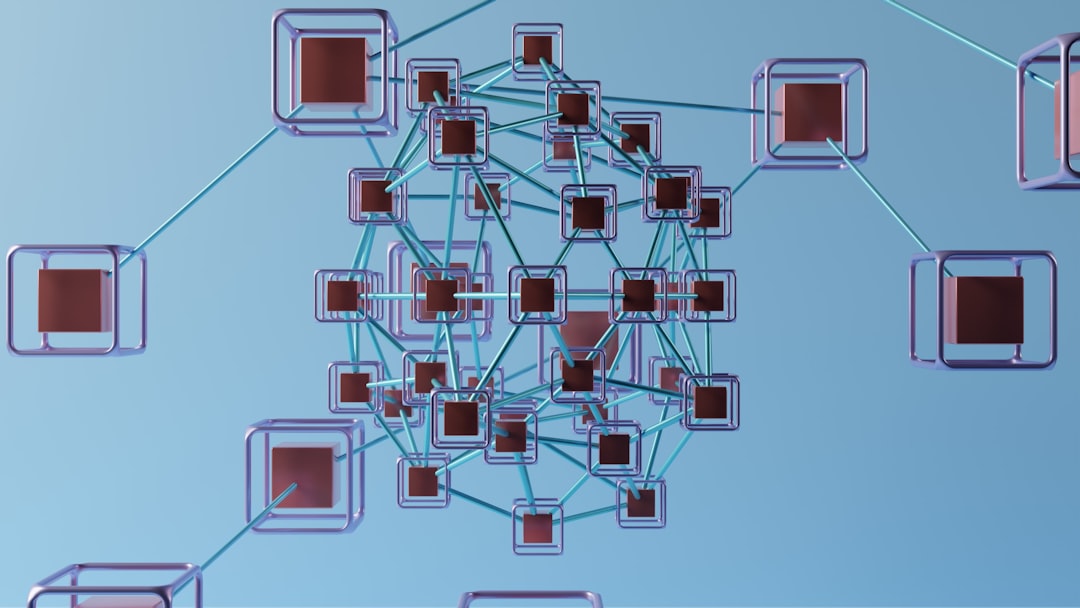
Google Cloud Spanner is a globally distributed relational database designed for horizontal scalability and strong consistency. It combines the familiarity of SQL with distributed systems resilience.
Why Developers Consider It
- True global distribution with synchronous replication
- Strong consistency guarantees
- Automatic sharding and scaling
- Enterprise-grade reliability (up to 99.999% availability SLA)
Spanner is particularly attractive for applications requiring globally consistent reads and writes, such as financial systems or international SaaS platforms.
Potential Trade-Offs
- Higher baseline cost compared to many alternatives
- Operational model may require adjustment for MySQL-native teams
- Less flexibility outside the Google Cloud ecosystem
When strict consistency across regions outweighs budget constraints, Spanner often emerges as a strong contender.
3. CockroachDB
CockroachDB is a distributed SQL database built for horizontal scalability and resilience. It is designed to survive data center outages while keeping applications online.
Why Developers Consider It
- PostgreSQL compatibility
- Geo-partitioning capabilities
- Automatic replication and self-healing
- Cloud-neutral deployment options
Unlike PlanetScale, CockroachDB can be self-hosted, deployed across multiple cloud providers, or managed through CockroachDB Cloud. For organizations seeking multi-cloud or hybrid-cloud strategies, this flexibility is often decisive.
Potential Trade-Offs
- Operational complexity in self-managed deployments
- Performance tuning may require deeper distributed systems knowledge
- Licensing considerations for enterprise features
Teams seeking infrastructure independence and strong fault tolerance frequently compare CockroachDB seriously during migration planning.
4. Neon
Neon is a serverless PostgreSQL platform focusing heavily on developer workflows. Much like PlanetScale, it separates compute and storage and supports branching for development environments.
Why Developers Consider It
- Instant database branching
- Autoscaling compute
- Usage-based pricing model
- Strong focus on modern development pipelines
Neon appeals especially to teams building applications around PostgreSQL rather than MySQL. Its branching functionality mirrors PlanetScale’s workflow advantages, making it an appealing drop-in replacement for teams shifting database engines.
Potential Trade-Offs
- Relatively newer platform compared to hyperscale cloud databases
- Advanced enterprise compliance features may vary by plan
- PostgreSQL-specific ecosystem
For startups and agile engineering teams, Neon offers a familiar developer-friendly experience while maintaining scalability.
5. MongoDB Atlas
MongoDB Atlas is a fully managed document database service. Although not relational, it frequently enters the conversation when teams reconsider their entire data model during migration.
Why Developers Consider It
- Flexible document schema
- Multi-cloud deployment options
- Built-in search and analytics features
- Global clusters with automatic scaling
For applications dealing with rapidly evolving schemas or large volumes of unstructured data, MongoDB Atlas may provide more adaptability than a strictly relational model.
Potential Trade-Offs
- Not SQL-native
- Data modeling requires different expertise
- Migration from relational systems can be complex
MongoDB Atlas becomes especially compelling when performance demands align better with document storage rather than relational joins.
Comparison Chart
| Solution | Database Model | Global Distribution | Serverless Option | Best For |
|---|---|---|---|---|
| Amazon Aurora | MySQL / PostgreSQL | Yes | Partial | AWS-native enterprise apps |
| Google Cloud Spanner | Relational (SQL) | Yes (strong consistency) | Managed scaling | Global financial or mission-critical systems |
| CockroachDB | PostgreSQL-compatible | Yes | Cloud managed option | Multi-cloud and hybrid deployments |
| Neon | PostgreSQL | Primarily regional with scaling | Yes | Developer-focused SaaS teams |
| MongoDB Atlas | Document | Yes | Yes | Flexible schema applications |
Key Factors Developers Evaluate Before Migrating
Before selecting a replacement, engineering teams usually analyze:
- Consistency requirements – Is strong global consistency mandatory?
- Workload patterns – Read-heavy, write-heavy, transactional, or analytical?
- Operational control – Fully managed vs. self-hosted flexibility
- Compliance and data residency – Regional restrictions or audit requirements
- Cost predictability – I/O-based billing vs. compute-based pricing
The migration decision often reflects not just current needs but anticipated growth over the next three to five years.
Frequently Asked Questions (FAQ)
1. Why do developers replace PlanetScale?
Common reasons include pricing, compliance requirements, the need for PostgreSQL instead of MySQL, stronger global consistency guarantees, or multi-cloud deployment strategies.
2. Is there a direct drop-in replacement for PlanetScale?
No single product matches every PlanetScale feature exactly. However, Neon offers similar branching workflows for PostgreSQL users, while Aurora provides enterprise MySQL compatibility.
3. Which solution is best for global applications?
Google Cloud Spanner and CockroachDB are frequently chosen for globally distributed workloads that require strong consistency across regions.
4. Is migrating from PlanetScale complex?
Migration complexity depends on schema size, application dependencies, and the target database model. Relational-to-relational migrations are typically simpler than switching to document databases.
5. How important is database branching?
For teams practicing continuous integration and parallel development, branching significantly improves workflow efficiency. Teams that rely heavily on this feature often prioritize alternatives that offer similar functionality.
6. What is the most cost-effective alternative?
Cost varies based on workload. Startups often explore Neon or CockroachDB Cloud, while enterprises with predictable workloads may negotiate competitive pricing with hyperscale providers like AWS or Google Cloud.
Replacing PlanetScale is rarely a purely technical decision; it reflects broader infrastructure strategy. Whether prioritizing global consistency, multi-cloud resilience, developer workflow optimization, or flexible data modeling, today’s database landscape offers strong alternatives suited for nearly every scaling challenge.