Whether you’re sketching out architectural plans, solving complex math equations, or bullet journaling your goals, graph paper provides a grid of structure that turns chaos into clarity. Despite its simple appearance, it can become an indispensable tool when used to its full potential. In this article, we’ll explore how to use graph paper effectively—unlocking its many possibilities across various disciplines.
Table of Contents
TLDR: How to Use Graph Paper Effectively
Graph paper is more than just a grid—it’s a productivity tool that supports accuracy, structure, and creativity. Master its usage for technical drawing, data plotting, journaling, and even planning. By aligning your work with the paper’s layout, you reduce errors and enhance clarity. From students to designers, anyone can benefit by using graph paper the right way.
What Is Graph Paper?
Graph paper, often called grid paper, is a sheet printed with a prearranged grid of squares. These squares serve as guides to keep things proportional and aligned, providing structure for:
- Mathematics and science – for plotting equations, data points, and geometric shapes.
- Art and design – for scaling and spatial composition.
- Everyday planning – such as bullet journaling or goal setting.
Depending on the intended use, graph paper comes in various sizes like 1/4 inch grids, metric grids, isometric, polar, or logarithmic variations.
1. Choosing the Right Type of Graph Paper
The first step to effective use is selecting the appropriate type. Here are a few common options:
- Standard Cartesian Grid – Ideal for general math, sketching, and notes. Each square is usually 1/4″ x 1/4″.
- Engineering Graph Paper – Often features a 10×10 grid per inch with darker lines every 5 or 10 units. Great for precise technical drawings.
- Isometric Graph Paper – Triangular grid used for 3D drawings and architectural renderings.
- Logarithmic and Polar Graph Paper – Used in specialized scientific and engineering applications.
When working on math assignments, opt for standard or engineering paper. For creative visualization and 3D design, isometric paper is your best bet.
2. Aligning with Precision and Accuracy
One of the biggest advantages of graph paper lies in its ability to help you stay aligned. Each square acts like a unit of measurement. Here’s how to make the most of that:
- Use the intersection points to align symbols and lines in equations or drawings.
- Draw consistently by using each square as a unit of space or distance.
- Use darker lines (on engineering paper) as visual breaks to keep large sections organized.
If you’re creating diagrams, begin by lightly sketching outlines using a pencil and a ruler. This allows for erasing and revising before committing in ink.
3. Graphing Mathematical Equations
Graph paper shines when it comes to plotting equations. Whether you’re graphing linear functions, parabolas, or trigonometric curves, a consistent scale is crucial. Here are some steps for doing it right:
- Label the axes: Mark your x-axis and y-axis clearly. Decide the scale (e.g., 1 square = 1 unit).
- Plot fixed points: Substitute values into the equation and mark the corresponding coordinates.
- Connect the dots: Draw smooth curves or straight lines as needed, depending on the equation type.
This practice helps build a visual intuition for mathematical concepts, especially for younger students or visual learners.
4. Designing and Drafting
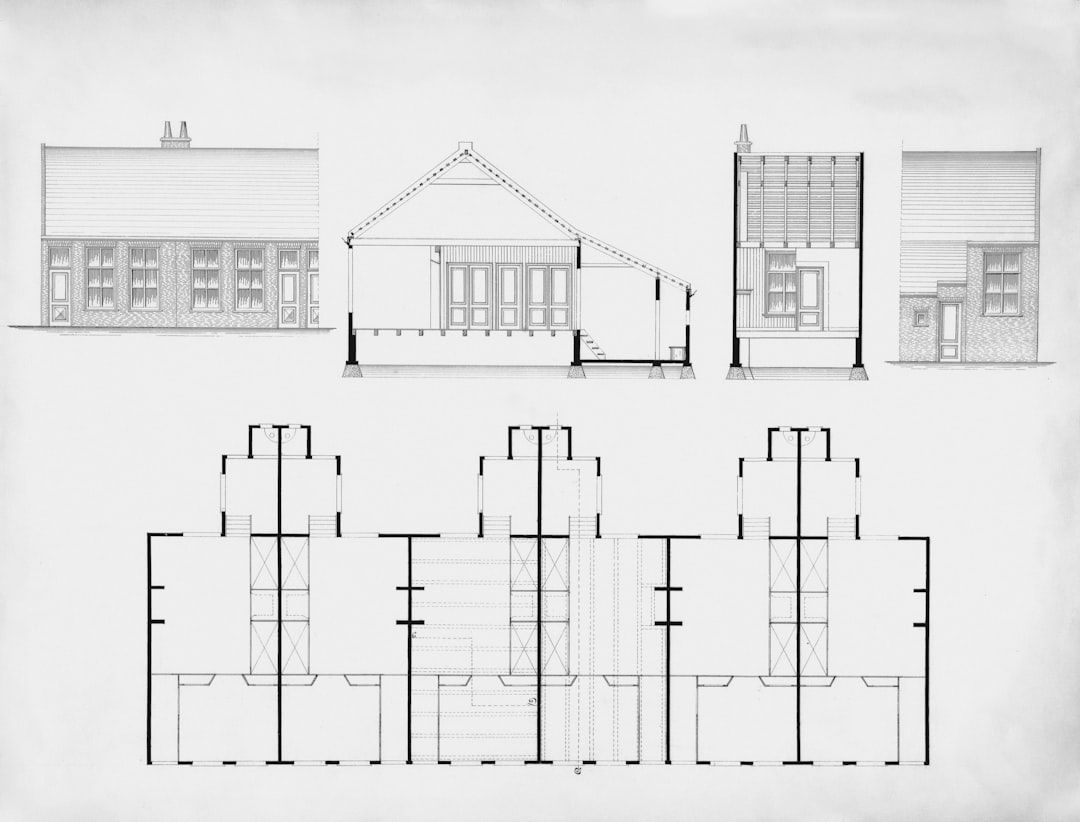
Engineers, architects, and hobbyists use graph paper to translate ideas into technical sketches. Its consistent grid helps convert anything from floor plans to circuit diagrams into evenly scaled representations.
Here’s how to enhance technical drawing using graph paper:
- Use scale conversion: Decide how many squares represent a real-world dimension (e.g., 1 square = 1 foot).
- Start from a reference point: Usually the bottom-left corner, to maintain consistency.
- Mark key measurements: Jot down lengths or angles directly next to the drawing.
Graph paper makes drafting intuitive, especially when precision counts. You can design everything from garden layouts to home renovations on paper before digitalizing.
5. Creative Uses: Journaling, Art & Bullet Planning
Graph paper isn’t just for technical use—it’s also a canvas for your imagination. The grid serves as a guide to create clean and organized layouts for:
- Bullet journal spreads – Perfect for making lists, trackers, and schedules.
- Mandalas and pixel art – Each square can be filled to contribute to a larger piece.
- Hand-lettering practice – Use vertical and horizontal alignment to improve consistency.
Try using colored pens or pencils to add visual interest while keeping your layout structured. Whether you’re tracking habits or planning life events, graph paper provides a flexible format.
6. Pro Tips for Using Graph Paper More Efficiently
Want to make your grid work even smarter for you? Try these pro-level strategies:
- Photocopy or scan custom templates: Save time by creating frequently-used layouts like weekly planners or budgeting grids.
- Use transparent overlays: Great for comparing multiple drafts or layering designs.
- Color coding: Assign different colors for categories, sections or priorities to quickly decode complex information.
Efficiency is not just about getting things done—it’s about doing them with less friction. These tricks help streamline your workflow while boosting visual clarity.
7. Digital Alternatives: Graph Paper Apps & Tools
If physical graph paper isn’t always practical, digital options provide an excellent alternative. Several apps replicate the grid layout with added conveniences like undo, layers, and exporting. Here are a few worth exploring:
- GoodNotes or Notability – Great for iPad users, with template imports and stylus compatibility.
- Desmos Graphing Calculator – Excellent for plotting math functions on virtual graph paper.
- AutoCAD or SketchUp – Industry-standard tools that elevate sketches into professional-grade designs.
Whether you’re on-the-go or presenting remotely, these digital tools help you maintain the utility of graph paper in a modern format.
Conclusion: Sketch Smarter, Plan Better
Graph paper is much more than a student’s aid—it’s a thinking tool for anyone who wants to bring order to complexity. Whether you’re solving equations, designing structures, or simply mapping out your week, graph paper can help you do it more effectively. Because of its grid structure, you get built-in alignment and measurement guidance with every mark you make.
Next time you reach for a blank sheet, consider grabbing some graph paper instead. You’ll be surprised by how much structure can nurture both your accuracy and your creativity.